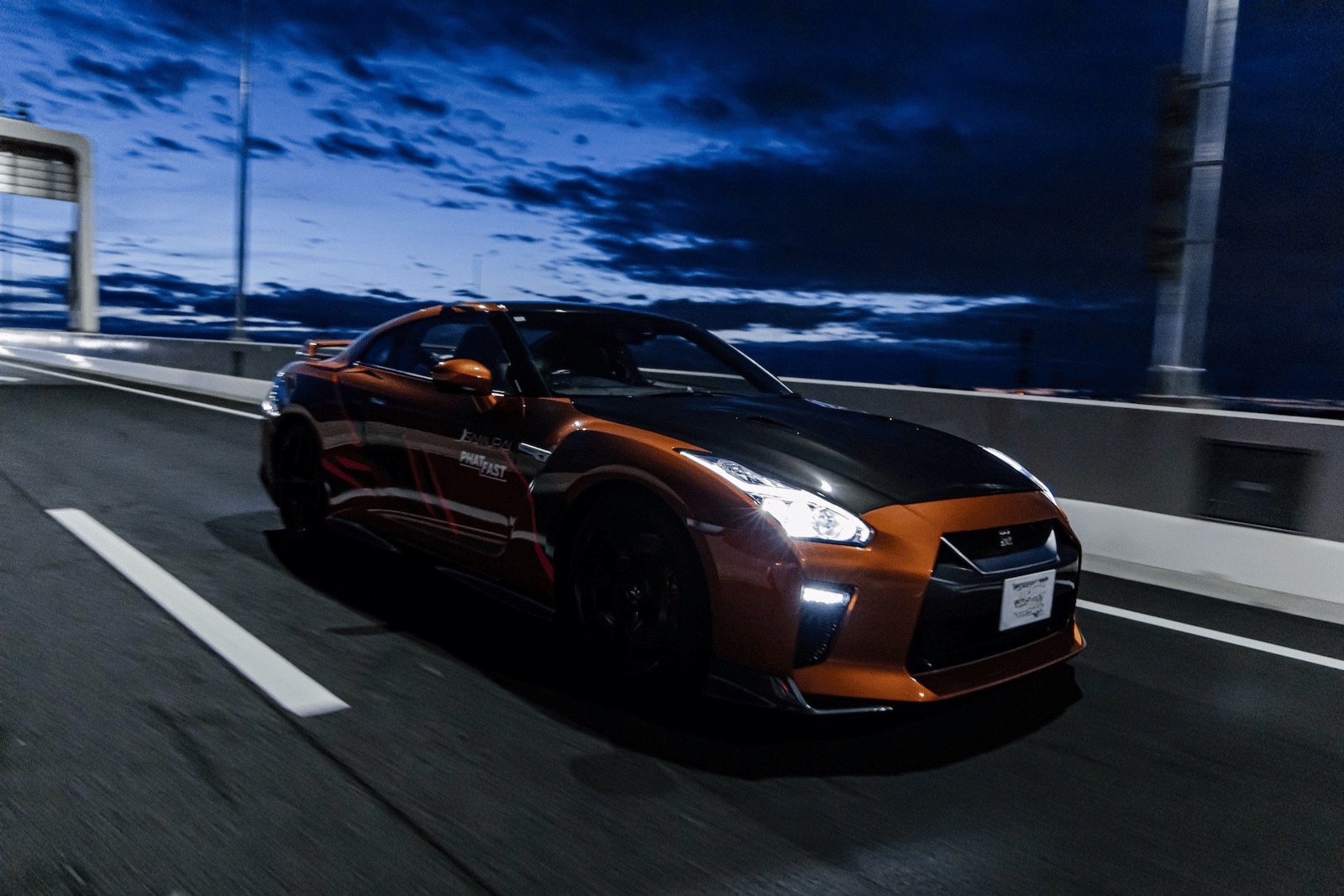
Daikoku PA Complete Guide
Daikoku Parking Area (Daikoku PA) is a highway rest stop on Yokohama's Wangan Expressway that's become one of the most famous car-meet spots in Japan — but it's fenced off, car-only, and impossible to reach on foot, by bicycle, by public transit, or by a taxi hailed off the street. Daikoku PA connects only to the expressway itself; ordinary city roads don't reach it at all, and there's no taxi rank inside to catch a ride out even if you somehow got in. For a visitor without their own car, the two realistic ways in are a self-drive rental (with the right paperwork to drive in Japan) or a guided tour that drives you there directly. Whether it's "worth it" depends on what you're hoping to see and how comfortable you are with the fact that it's a real public rest area, not a scheduled attraction — cars gather there, they don't perform there.
What is Daikoku PA?
Daikoku PA is a parking area on the Wangan Line of the Shuto (Metropolitan) Expressway in Yokohama, built as a standard highway rest stop but internationally known as one of Japan's most iconic informal car-meet locations.
It has restrooms, vending machines and parking bays like any expressway PA — the difference is who shows up. For decades, JDM owners, tuners and enthusiasts have used it as an informal late-night and early-morning gathering point, and it's appeared repeatedly in car culture media over the years as a symbol of Japan's street car scene.
It is not a tourist facility, a fixed venue or a scheduled event. There's no ticket, no gate, no guarantee of what will be there on a given night — it's a functioning piece of expressway infrastructure that happens to also be a car culture landmark.
How do you get to Daikoku PA without a car?
You can't walk, cycle, take public transit, or take a taxi to Daikoku PA — the parking area is fenced off from the surrounding city, and the only way in is via the expressway itself, specifically the Wangan Line (Bayshore Route, "B") or the Daikoku Line ("K5"). General roads simply don't connect to Daikoku PA, so a taxi approaching the normal way, from the street, can't get you there.
This is confirmed directly by the Shuto (Metropolitan) Expressway's own official notice for Daikoku PA, and it matches independent local reporting.
A few specifics worth knowing before you plan a visit:
- Daikoku PA is only reachable by vehicles already on the expressway (via the Wangan/Bayshore "B" route or the Daikoku "K5" route). The gates connecting it to the surrounding general roads are closed, the whole area is fenced, and it's not just pedestrians, cyclists and mopeds who can't get in or out on foot — cars and motorcycles coming from ordinary streets can't get in either, including from the nearby Daikoku Futo entrance.
- This is the single biggest misconception visitors have, so it's worth spelling out: your map app will get you close, then stop being useful. Any route that avoids the expressway — walking directions, a taxi route, a bus route — only takes you to the vicinity of Daikoku PA, never inside it, because there is no connection from general roads at all. Showing up nearby by taxi or on foot doesn't get you in.
- There's no taxi rank or bus stop inside Daikoku PA, so even setting the access problem aside, there's no way to arrange a ride out from inside the PA once you're there.
In practical terms, this rules taxis out as a way to visit Daikoku PA. For a visitor without their own car, the two realistic options are:
- A self-drive rental, which requires the right paperwork (an International Driving Permit or equivalent) and confidence navigating an unfamiliar expressway system.
- A guided tour that drives you there directly (see JDM Experiences in Japan, Compared for how this stacks up against a self-drive rental).
Is Daikoku PA worth visiting?
If what you want is to stand in the middle of the scene you've seen in JDM photos and videos — real owners, real cars, no stage — Daikoku PA delivers something a museum or dealership can't. If you want a guaranteed spectacle on a fixed schedule, it isn't that, because it's a public rest area, not a managed venue, and what's there on any given night depends on the day, the time, and whether police have closed it to gatherings.
That unpredictability is the honest trade-off of visiting a real, living car culture spot instead of a curated one. Some points worth weighing before you decide how to visit:
- It's genuinely one of the most referenced JDM/car-culture locations internationally — it shows up constantly in the searches, blogs and videos that bring car enthusiasts to Japan in the first place.
- There's no fixed schedule and no official body guaranteeing cars will be there — see the sections below on timing and police closures.
- Because it's not staffed or ticketed, there's no one on-site to explain what you're looking at, introduce you to anyone, or tell you if tonight is a good night — which is exactly the gap a knowledgeable local guide fills.
- Getting there and back independently (see above) adds real friction that a first-time visitor may not expect from a "parking area."
First-time visitors also tend to focus entirely on the cars in the lot and miss a couple of smaller details. The convenience store at the PA sometimes stocks car-culture merchandise worth a look, and it's not just about the cars parked at ground level — the view of the highway junction looking up from below is worth taking in too. It's the kind of thing you only notice after coming here for a while.
What's the best way to visit Daikoku PA — guided tour or self-drive rental?
A guided tour and a self-drive rental are the two realistic ways to visit Daikoku PA as a foreign visitor — a taxi isn't a genuine third option, since Daikoku PA isn't reachable from general roads and there's no taxi rank inside to get you back out (see above).
A self-drive rental gives you full control but means navigating an unfamiliar expressway system yourself, with no one to tell you if the PA is open that night and no backup plan if it's closed. A guided tour costs more but includes someone who knows the route, drives you there directly, and has a plan if Daikoku PA itself is closed.
For the full breakdown — pricing ranges, licence requirements, and who each option actually suits — see our detailed comparison: JDM Experiences in Japan, Compared.
What days and times does Daikoku PA get busy?
The busiest window tends to be Friday and weekend nights, once it's dark — roughly from 8:00 PM onward — when the widest variety of custom cars tends to show up, and it's the time JDM tours (including ours) generally aim for.
That's not a guaranteed best time to go, though: those same peak weekend hours are also when Daikoku PA is most likely to get closed by police (see below), so a busy Friday or Saturday night is a trade-off between "more cars" and "higher closure risk," not a safe bet either way. More recently, with more international visitors around, the crowd has also started spreading out onto weeknights rather than concentrating purely on weekends.
How often does the police close Daikoku PA, and can you tell in advance?
Closures happen most often when the crowd gets large or when there's an incident on the Wangan Line — in practice, that means the risk rises sharply on weekend nights from around 7–8 PM onward, exactly when the PA is busiest.
There's no official published schedule for these closures. The most useful thing you can do beforehand is check general Shuto Expressway traffic and congestion information, since a Daikoku PA closure is usually tied to a broader traffic restriction on the Wangan Line rather than a standalone decision specific to the PA. Even with that check, closures can happen with little warning — which is part of why our tours build in a backup plan (see below) rather than relying on Daikoku PA being open.
What's the backup spot if Daikoku PA is closed?
If Daikoku PA is closed, the backup depends on the time of day. On weekday daytimes, the NISMO factory is a solid alternative — it's a public-facing facility, so it's a straightforward stop. In the evening, there are a few parking areas around Yokohama's Minato Mirai and along the Wangan Line waterfront with sea views, where you can photograph cars without getting in anyone's way, as long as you're considerate about it.
This kind of fallback knowledge comes from watching the scene for decades rather than from any published list, and it's a big part of why our tours don't just end for the night if Daikoku PA happens to be closed.
What are the etiquette rules and things not to do at Daikoku PA?
The core rules, from someone who's watched this scene for three decades: don't photograph other people's license plates — or the people themselves — and post them on social media without permission, don't touch anyone's car, and remember that Daikoku PA is still a working rest area, so park somewhere that doesn't get in the way of regular PA users rather than wherever's most convenient for a photo.
These aren't arbitrary rules for their own sake. The single worst outcome for everyone who cares about this scene is Daikoku PA getting closed down or the gatherings stopping altogether — and that's exactly the risk when visitors don't respect the space. Following these basics isn't just etiquette; it's what keeps this culture accessible at all, for locals and visitors alike.
How has Daikoku PA changed over the past 30 years?
TARZAN YAMADA has been coming to Daikoku PA for 30 years, and the biggest shift he's seen is what the gathering is for. In the early days, it was a rest stop for drivers who were there because they loved driving itself — Daikoku PA was just where they'd pause between runs.
More recently, with the rise in international visitors, it's shifted toward being about photography and showing cars off — people come specifically to be seen and to shoot, rather than purely to drive. It's the same location, but a noticeably different scene than it was three decades ago.